Dolby Atmos Music has arrived
A fully immersive audio experience is here.
Mix your music in spatial audio with Dolby Atmos
What is Dolby Atmos Music?
Dolby Atmos gives artists a new canvas: one that stretches far beyond stereo. It’s not just left and right anymore. It’s forward, behind, above, below. It’s space to move, to breathe, to build worlds your listeners can step inside.
Whether you want to reimagine your existing tracks or start with Dolby Atmos in mind, we can help you bring your music into a whole new dimension.
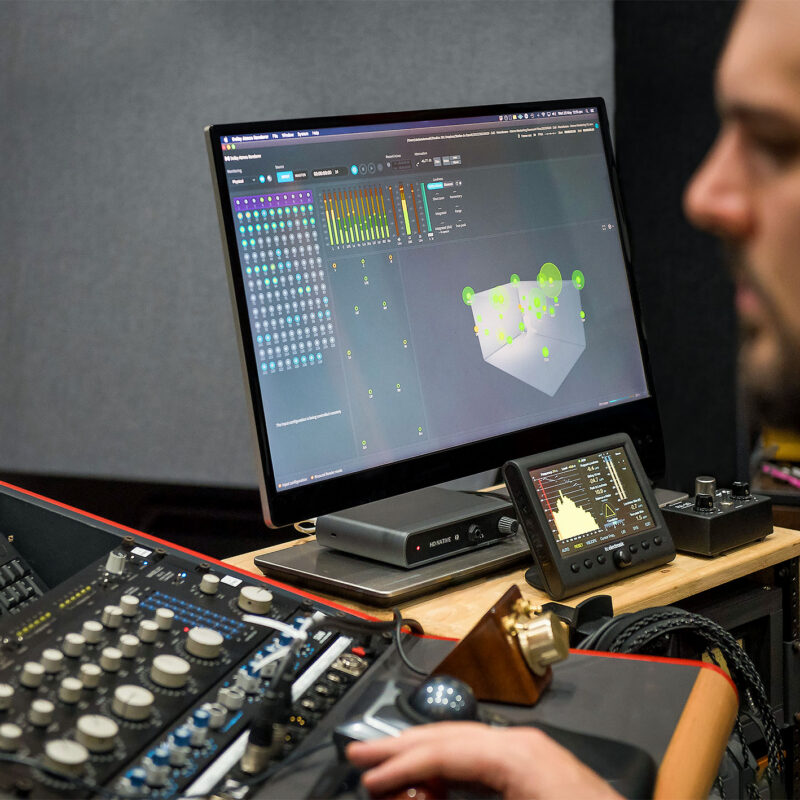
What is Dolby Atmos Music? How Does it Work?
So how does Dolby Atmos Music differ from the surround sound systems that we are used to? There are two key elements that define Dolby Atmos Music…
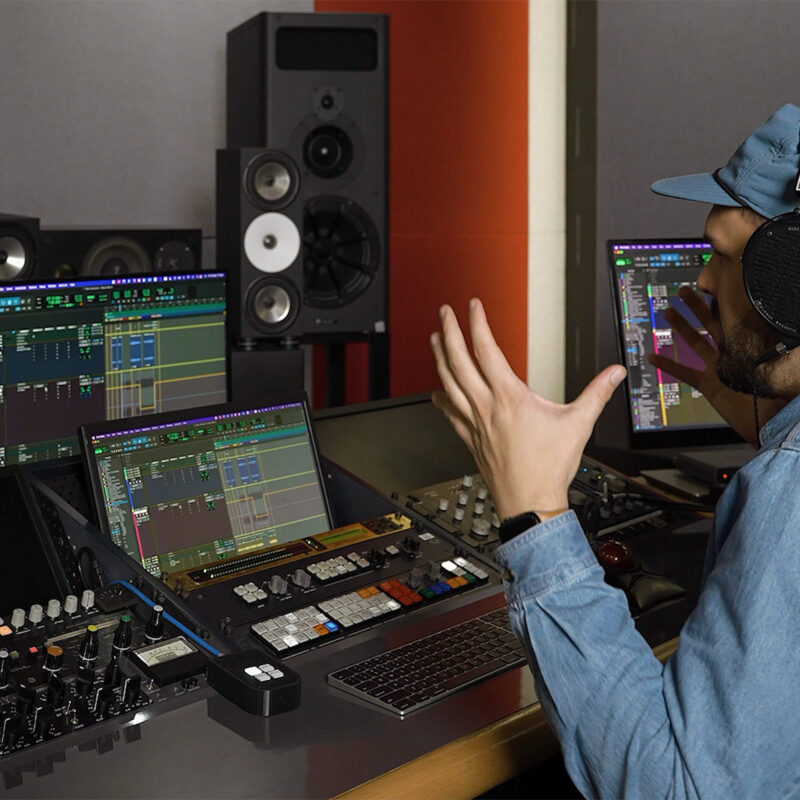
Stefan Du Randt breaks down DOBBY’s “Ancestor” Dolby Atmos Mix
Stefan Du Randt breaks down the mixing of DOBBY’s “Ancestor” in Dolby Atmos Music and highlights the tricks and techniques to mixing a track in spatial audio.
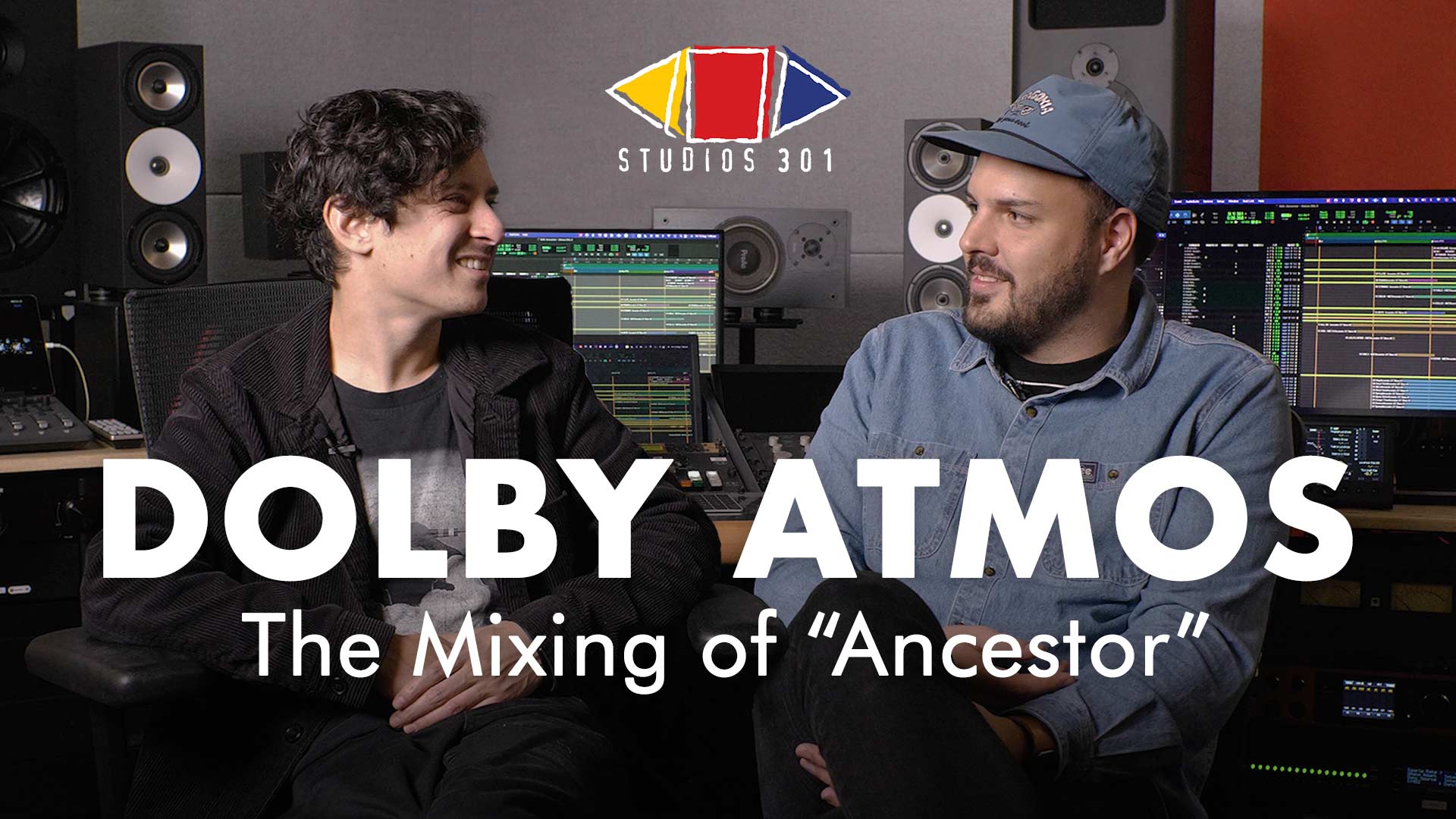
The Mixing of “Ancestor” – DOLBY ATMOS
Stefan Du Randt and DOBBY sit down to discuss the impact of Dolby Atmos on his latest single “Ancestor.”
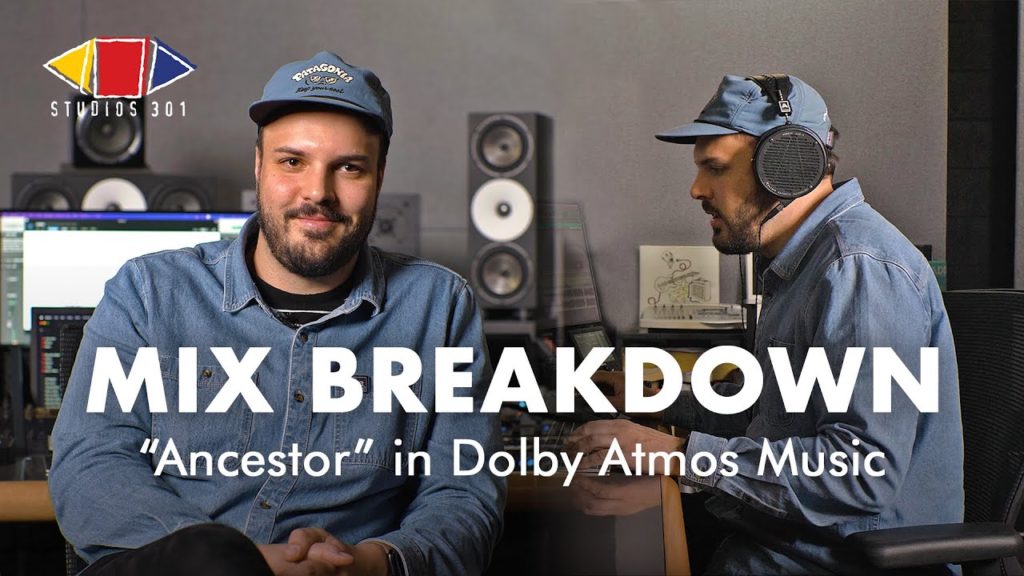
Breaking Down a Mix in DOLBY ATMOS
Stefan Du Randt breaks down the mixing of DOBBY’s “Ancestor” in Dolby Atmos Music and highlights the tricks and techniques to mixing a track in spatial audio.
Frequently Asked Questions
How does Dolby Atmos Music work?
Dolby Atmos is object-based surround sound, allowing certain instruments or effects to be mapped to an object and manipulated around a virtual 3D space.
For example, the slide guitar leading into the chorus of Elton John’s “Rocket Man” pans down the middle from front to back and into the ceiling, as opposed to panning left and right in the stereo version.
What is dynamic head tracking?
Dynamic head tracking is a setting that allows you to “look” around the virtual 3D space by turning your head. For example, if a keyboard is set to be on the right of the listener, by turning your head to the right you will be able to hear that keyboard in front of you as if you were looking at it and everything that was previously in front of you is now coming from your left.
Why release your music in Dolby Atmos?
- Dolby Atmos Music is quickly receiving widespread support across many devices and streaming services.
- New releases stand out and have a greater possibility to be included on featured playlists.
- Re-releasing your existing music in spatial audio is a great way to give your listeners a brand new experience and perspective.
Why use Studios 301 for Dolby Atmos Music?
Our Dolby Atmos mixing and mastering is done in a fully calibrated studio. We mix and master in a world-class stereo mastering room designed to be acoustically neutral, resulting in a mix that will translate across all Dolby Atmos systems.
If you’re a local artist, you have the added benefit of being able to attend a Dolby Atmos mix, hearing the full power of spatial audio in our calibrated studio.
What do we need for a Dolby Atmos mix?
Before you start:
- Your stereo master has to be signed off.
Everything below is built to line up against it, so nothing in the mix should change after this point.
- You have the session as you last left it.
We would rather pick up where you finished than rebuild your balance from scratch.
We’ll need the following:
- Tempo/BPM (if the song was recorded without a click, let us know)
- Final, signed off stereo master file
- Mix Stems at 48kHz 24bit
- Every single file printed from the same start point, from the very top of the session. This matters more than anything else on this page. Files that begin at different points cannot be lined up against each other.
- Do not normalise anything. Your stems should add up to sound the same as your final stereo mix.
- Export individual tracks at the levels you currently have them set to. Leave the plugins on your instrument tracks, and keep your volume automation on the wet versions. Your balance decisions are part of the record, and we want to start from them.
- Audio files in one zipped folder per song
Meet Stefan Du Randt
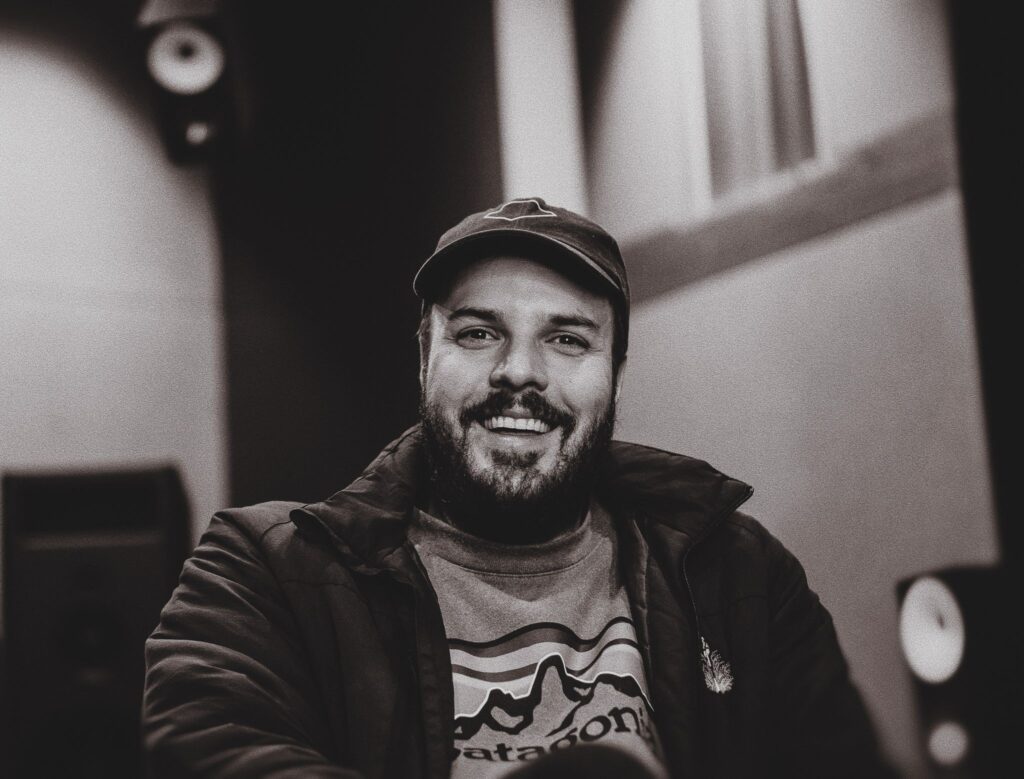
Taking the lead on implementing Dolby Atmos for music at Studios 301, engineer Stefan Du Randt has spent 2022 mixing close to a hundred songs in this new audio format for music and designed and calibrated our first custom spatial audio mixing suite.
His diverse experience and passion for creating immersive projects for artists, alongside being one of Studios 301’s busiest recording and mix engineers, have led to some incredibly eclectic credits, including Mac Miller, Coldplay, Zedd, Thelma Plum, Guy Sebastian, Elton John, Polish Club, Thelma Plum and Nerve to name a few.
Stefan is equipped with the knowledge and experience to deliver an immersive and exciting spatial audio mix while staying true to the original intent and feel of the stereo master file.
Ready to take your music to the next level?
Book your Dolby Atmos mix today and hear the magic of spatial audio with your own music.