If you’re releasing music in 2026, whether on Spotify, Apple Music, vinyl, or any other format, you’ll need an ISRC for every track. But what exactly is an ISRC, how do you get one, and why does it matter?
This guide covers everything you need to know about ISRCs: what they are, how they work with streaming platforms, how to obtain them in Australia, and common mistakes to avoid.
What is an ISRC?
ISRC stands for International Standard Recording Code. It’s a unique 12-character alphanumeric code assigned to an individual sound recording. Think of it as a digital fingerprint for your track, distinguishing it from every other recording in existence.
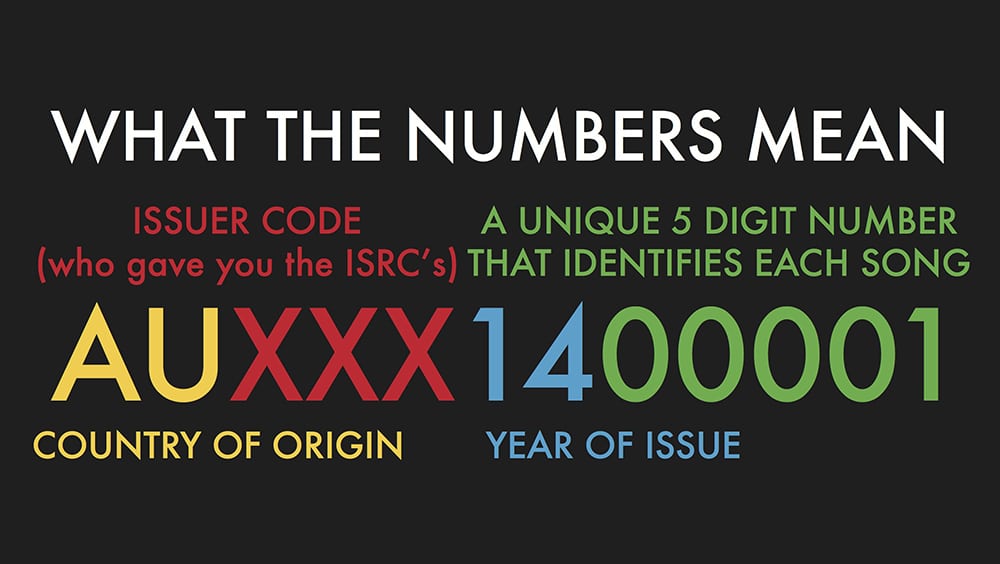
An ISRC looks like this: AU-S30-24-00001
The code breaks down as follows:
| Segment | Meaning | Example |
|---|---|---|
| Country code | Country of the registrant | AU (Australia) |
| Registrant code | Assigned to the organisation | S30 |
| Year of reference | Year the code was assigned | 24 (2024) |
| Designation code | Unique number for the recording | 00001 |
Every distinct recording gets its own ISRC. If you release the same song as a single, then again on an album, and later as a remastered version, each version receives a separate ISRC.
Why Do ISRCs Matter?
ISRCs serve three critical functions for anyone releasing music:
1. Royalty tracking. Streaming platforms, radio broadcasters, and collection societies use ISRCs to identify recordings and attribute plays to the correct rights holders. Without an ISRC, your streams and sales may not be properly tracked, which means lost revenue.
2. Catalogue management. Labels, distributors, publishers, and organisations like ARIA and APRA AMCOS use ISRCs to catalogue recordings efficiently. When your music appears on multiple platforms and in multiple territories, the ISRC is what ties it all together.
3. Platform requirements. Most digital distributors and streaming platforms require an ISRC for every track you upload. Spotify, Apple Music, Amazon Music, TIDAL, and YouTube Music all use ISRCs as part of their metadata requirements.
If you want to earn income from your recordings, ISRCs make that possible by ensuring every play, sale, and broadcast is properly attributed to you.
ISRCs and Streaming Platforms
When you upload music through a digital distributor, each track’s ISRC is embedded in the metadata that gets sent to streaming platforms. This is how platforms like Spotify and Apple Music identify your recording, even if multiple distributors deliver the same track.
This is particularly important if you:
- Switch distributors and need your existing streams to carry over
- Have the same recording available on multiple services
- Want to ensure radio plays and sync placements are tracked back to your recording
The ISRC stays with the recording for its entire lifecycle. It does not change if you switch distributors, re-release the track, or license it to a different territory.
How to Get ISRCs in Australia
There are two main ways to obtain ISRCs:
Option 1: Through Your Digital Distributor
The simplest approach. Most digital distributors (including DistroKid, TuneCore, CD Baby, and LANDR) automatically generate and assign ISRCs to your tracks as part of the upload process. If you’re using a distributor, you likely already have ISRCs without needing to do anything extra.
Option 2: Directly Through ARIA
If you are the rights holder for Australian recordings, you can request a registrant code from ARIA (Australian Recording Industry Association) by completing their ISRC Rights Holder Form and emailing it to isrc@aria.com.au. ARIA will provide you with a registrant code and instructions for generating your own ISRCs. This process is free and typically takes 1 to 2 business days.
Once you have a registrant code, you can create ISRCs for all your future releases without needing to contact ARIA again.
Important note for signed artists: if you are signed to a record label, your label usually handles ISRC assignment internally. Check with your label before obtaining ISRCs independently to avoid duplicate codes being issued for the same recording.
ISRC vs UPC: What’s the Difference?
This is one of the most common points of confusion for independent artists. Both are identification codes, but they serve different purposes:
| ISRC | UPC / EAN | |
|---|---|---|
| Identifies | An individual recording (one song) | A product (an album, EP, or single release) |
| Scope | One per track | One per release |
| Used by | Streaming platforms, broadcasters, collection societies | Retailers, charts, sales tracking |
| Example | AU-S30-24-00001 | 123456789012 |
A single album with 10 tracks would have one UPC (for the album as a product) and ten ISRCs (one for each track). If you release a track as both a single and as part of an album, the ISRC stays the same, but each release gets its own UPC.
Most digital distributors handle both UPC and ISRC assignment automatically.
Common ISRC Mistakes to Avoid
Assigning the same ISRC to different recordings. Each distinct recording must have its own unique ISRC. A live version, a remix, a radio edit, and a remaster of the same song each need separate codes.
Assigning different ISRCs to the same recording. If the exact same recording appears on a single and then on an album, it should keep the same ISRC. Assigning a new code makes it harder for platforms to consolidate your streams and royalties.
Not including ISRCs in your metadata. Even if your distributor generates the codes automatically, check that they appear correctly in your release metadata. Missing or incorrect ISRCs can cause royalty tracking issues.
Paying for ISRCs unnecessarily. ISRCs are free to obtain through ARIA in Australia and through most digital distributors. Be cautious of third-party services that charge significant fees for ISRC generation.
Frequently Asked Questions
What is an ISRC code?
ISRC stands for International Standard Recording Code. It’s a unique 12-character code assigned to an individual sound recording, used to track plays, streams, and sales across platforms worldwide.
Are ISRCs free?
Yes. In Australia, ARIA issues registrant codes at no charge. Most digital distributors also generate ISRCs automatically as part of the upload process.
Do I need an ISRC to release music on Spotify?
Yes. Spotify and most other streaming platforms require an ISRC for every track. Your digital distributor will typically handle this automatically.
Does the ISRC change if I switch distributors?
No. The ISRC stays with the recording permanently. If you move to a new distributor, use the same ISRCs to ensure your existing streams and data carry over.
What’s the difference between an ISRC and a UPC?
An ISRC identifies a single recording (one song). A UPC identifies a product (an album, EP, or single release). An album with 10 tracks has one UPC and ten ISRCs.
Can I get ISRCs from Studios 301?
Yes. We can issue ISRCs as part of your mastering session, which is particularly useful for physical formats (CD, vinyl) where the code needs to be embedded in the master. Get in touch to arrange this.
Get Your Music Mastered and Ready for Release
ISRCs are just one part of preparing your music for the world. Studios 301 offers professional online mastering with ISRC assignment included on request.
Already mastered? Explore our distribution service to get your music on every major platform.