If you’ve finished recording and mixing a track, there’s one more step before it’s ready for the world: mastering. But what does mastering actually involve, and why does it matter?
Audio mastering is the final stage of music production. It’s the process of preparing a finished mix for distribution, whether that means streaming on Spotify and Apple Music, pressing to vinyl, or broadcasting on radio. A mastering engineer listens to the completed mix with fresh ears, applies corrective and creative processing, and optimises the audio so it translates well across every playback system.
At Studios 301, our mastering engineers have worked on thousands of releases across every genre, from classical and jazz to electronic and pop. Here’s what the process actually looks like.
What Does a Mastering Engineer Do?
Mastering involves two distinct phases: corrective processing and creative processing.
Corrective Processing
The corrective stage addresses technical issues in the mix that may not have been apparent in the mixing environment. Every studio room has its own acoustic character, and mix engineers make decisions based on what they hear in that specific space. This can introduce subtle imbalances that only become obvious on other systems.
Common issues a mastering engineer corrects:
- Frequency imbalances (too much bass, harsh high end, muddy mids)
- Stereo imbalance or phase problems
- Inconsistent dynamics (sections that jump in volume unexpectedly)
- Unwanted noise, hum, or digital artefacts
- Lack of definition in the low end
- Buried vocals or instruments
The tools used at this stage include EQ, compression, multiband compression, stereo imaging, and limiting, applied with a light touch. The goal is not to alter the mix, but to polish it so it sounds its best across a wide range of playback systems, from studio monitors to phone speakers.
Creative Processing
This is where the mastering engineer’s personality comes into play. Every engineer has their own aesthetic sensibility, their own sense of what makes a record feel finished. Some favour warmth and weight; others lean towards clarity and air.
The creative stage is a conversation between the artist’s vision and the engineer’s experience. A great mastering engineer enhances what’s already there, bringing out the qualities that make a record special. This is also why many artists develop long-term relationships with a particular mastering engineer: they find someone who understands their sound.
Mastering for Streaming in 2026
One of the biggest changes in mastering over the past decade has been the shift towards streaming platforms. Each major platform applies loudness normalisation, which adjusts the playback volume of every track to a consistent level. This has significant implications for how music should be mastered.
Current loudness targets by platform:
| Platform | Loudness Target | True Peak Limit |
|---|---|---|
| Spotify | -14 LUFS (integrated) | -1 dBTP |
| Apple Music | -16 LUFS (with Sound Check) | -1 dBTP |
| YouTube | -13 to -14 LUFS | -1 dBTP |
| TIDAL | -14 LUFS | -1 dBTP |
| Amazon Music | -14 LUFS | -2 dBTP |
What this means in practice: if your master is louder than the platform’s target, it will be turned down during playback. If it’s quieter, it will be turned up (within limits). This means that crushing a master to be as loud as possible, which was common during the “loudness war” era, no longer provides a competitive advantage on streaming platforms. In fact, it can make your music sound worse, because heavily limited tracks lose dynamics and clarity when turned down by the normalisation algorithm.
A well-balanced master in the range of -14 to -9 LUFS (depending on genre) with true peaks below -1 dBTP will translate well across all major platforms.
For a deeper look at loudness standards, see our guide to target loudness for streaming services.
The Loudness War: A Brief History
The desire to make records sound louder than the competition has existed since the days of vinyl. Known as the “loudness war”, this arms race accelerated through the CD era and peaked in the early 2000s, when many records were mastered at extreme levels that sacrificed dynamics for sheer volume.
The psychoacoustic reason is simple: when two recordings are played side by side, the louder one almost always sounds “better” to the listener (up to a point). This incentivised labels, DJs and radio stations to push for ever-louder masters.
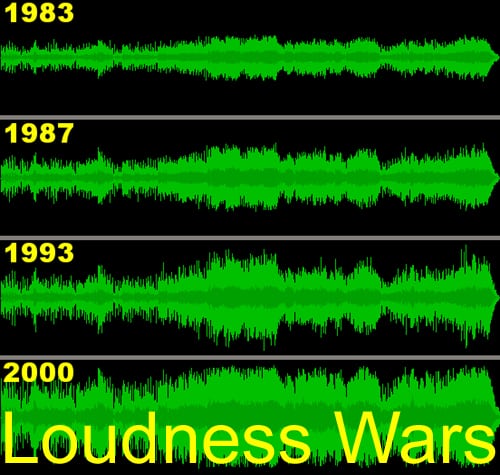
Digital recording removed the physical limitations of vinyl and tape, making it technically possible to push levels even further. But the tradeoff was clear: overly limited masters sounded “squashed”, flat, and fatiguing. The music may have been louder, but it lost the dynamics and punch that made it feel alive.
Streaming normalisation has effectively ended the loudness war. When every track is played at the same perceived volume, there’s no advantage to being louder. The focus has shifted back to dynamics, clarity and musicality, which is exactly where mastering should be.
How Online Mastering Works
At Studios 301, we offer online mastering for artists and labels worldwide. The process is straightforward:
- Upload your files. Submit your finished mixes through our online portal, along with any notes on your preferences (reference tracks, loudness targets, format requirements).
- Our engineers master your tracks. Your music is mastered on the same equipment, and by the same engineers who have worked on thousands of major label and independent releases.
- Review and approve. You receive your mastered files back (typically within a few business days).
Online mastering removes the need to travel to a studio while delivering the same professional results. Whether you’re in Sydney, London, or Los Angeles, you get access to the full Studios 301 mastering team.
How to Prepare Your Tracks for Mastering
Before sending your finished mixes for mastering, there are a few important steps to follow. Getting this right ensures the mastering engineer has the best possible material to work with.
Your checklist:
- Remove limiting from the master bus. If you’ve been mixing through a mastering chain (such as iZotope Ozone or T-RackS), turn off the final limiter before bouncing. Leave any other processing that shaped your mix balance, but remove the brickwall limiting stage.
- Check your levels. After removing the limiter, play back the loudest section of the track and make sure no signal exceeds 0 dB. Pull the output level down if needed to leave headroom.
- Bounce at the project sample rate and 24-bit. Whether your session is at 44.1kHz, 48kHz, or 96kHz, bounce at the native sample rate. Always use 24-bit (not 16-bit) to preserve dynamic range.
- Include reverb tails. Make sure your bounce extends past the end of the last audible sound, including any reverb or delay tails that ring out.
- Label your files clearly. Include the track number, song title, and version (e.g., “01_SongTitle_Mix_v3.wav”).
What your waveform should look like:
You want visible peaks and valleys in the waveform, showing natural dynamics. If the waveform looks like a solid rectangle (a “brick”), the mix has been over-limited and leaves very little room for the mastering engineer to work.
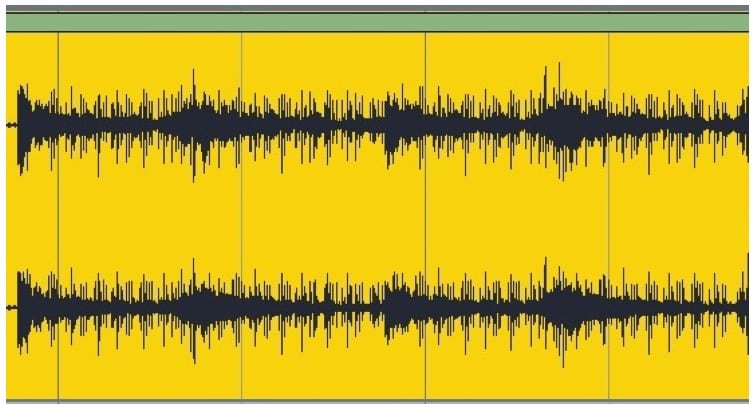
You do not want this, which resembles a brick:
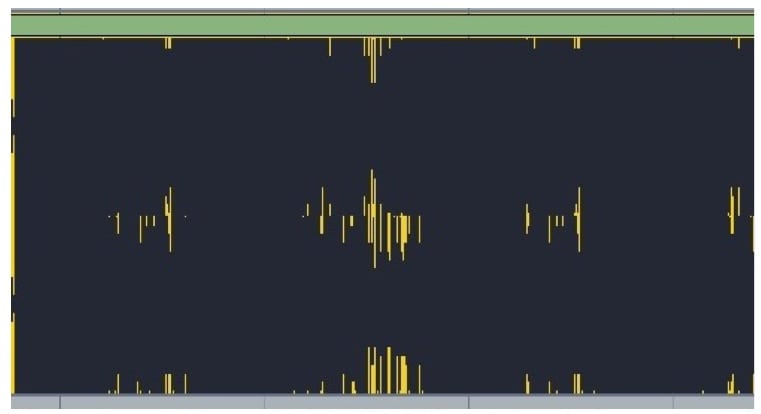
A mix with healthy dynamics gives the mastering engineer the space to apply both corrective and creative processing. An over-limited mix is like handing someone a finished product and asking them to improve it: the options are severely restricted.
How to Choose a Mastering Engineer
Choosing the right mastering engineer is an important decision. Here are a few things to consider:
- Listen to their previous work. Our mastering engineers have credits or a portfolio you can review. Pay attention to whether their work sounds the way you like within your genre.
- Consider the relationship. Mastering is a collaborative process. An engineer who understands your style will deliver great results.
- Understand the turnaround. For time-sensitive releases, confirm the expected delivery timeline before booking.
At Studios 301, our mastering team includes engineers with decades of combined experience across every genre. Learn more about our online mastering service or get in touch to discuss your project.
Frequently Asked Questions
What is audio mastering?
Mastering is the final stage of music production, where a finished mix is polished, balanced and optimised for distribution. A mastering engineer applies corrective processing (fixing technical issues) and creative processing (enhancing the overall sound), then formats the audio for the intended release platform.
How much does mastering cost?
At Studios 301, mastering is priced per track or per album. Contact us for a quote based on your project. Online mastering is available for artists and labels worldwide.
Do I need mastering if I’m only releasing on Spotify?
Yes. Streaming platforms apply loudness normalisation, but they don’t correct frequency imbalances, phase issues, or dynamics problems. Professional mastering ensures your music sounds its best on every platform and every playback system.
What’s the difference between mixing and mastering?
Mixing is the process of balancing and processing individual tracks (vocals, drums, guitars, etc.) into a stereo mix. Mastering takes that finished stereo mix and prepares it for release, addressing overall tonal balance, dynamics, loudness and format-specific requirements.
How loud should my master be for streaming?
Most streaming platforms normalise playback to around -14 LUFS. A master in the range of -14 to -9 LUFS (depending on genre) with true peaks below -1 dBTP will translate well across all major platforms.
Should I master my own music?
While it’s technically possible, professional mastering brings a fresh perspective, a calibrated listening environment, and specialised tools and experience. An impartial set of ears on your music can reveal issues that are difficult to hear after spending weeks mixing.
Get Your Music Mastered at Studios 301
Ready to take your mixes to the next level? Studios 301 offers professional online mastering for artists, producers and labels worldwide.
Looking for mixing as well? Explore our online mixing service.